Author: broker

  • CRDB voted Best Bank in Tanzania by EuroMoney
    CRDB voted Best Bank in Tanzania by EuroMoney

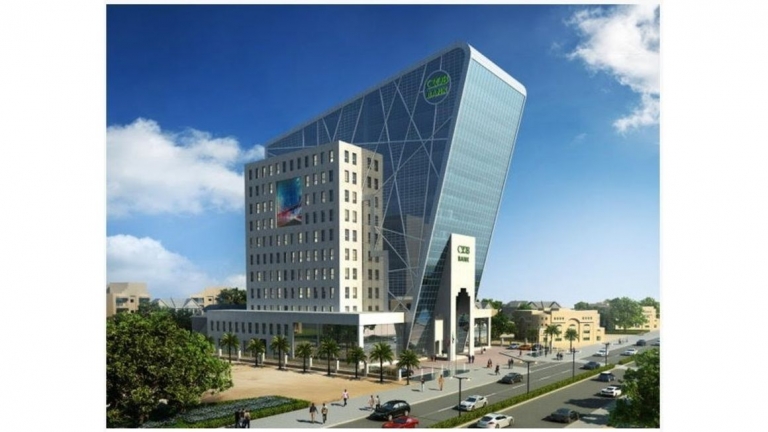
    Dar es Salaam. CRDB Bank Plc has been voted as the best bank in Tanzania, thanks to its transformative approach.

    The bank was named  by Euromoney, a London-based monthly magazine that focuses on business and finance, it was revealed yesterday.

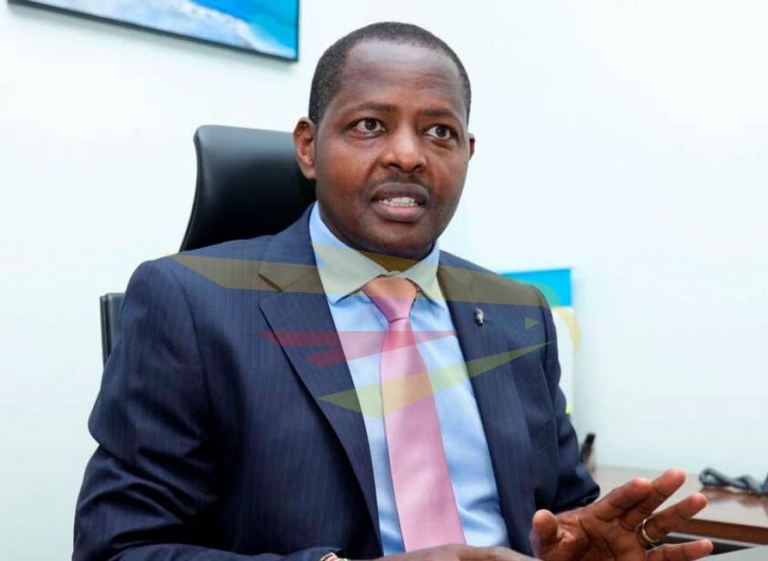
    CRDB Bank Plc managing director, Mr Abdulmajid Nsekela said in Dar es Salaam yesterday that the award was in recognition of the bank’s transformation journey which focuses on creating sustained value, upping financial inclusion and building inclusive economic prosperity through innovative ways of delivering its products and services to clients.

    “This award is proof that we are a leading bank in the country. It is also a sign of recognition to our transformative journey that has led to a sustainable growth of our bank,” said the CRDB boss.

    Adding: “Our bank’s transformative journey has benefited our customers, investors and the country’s economy at large.”

    Euromoney also recognised the bank’s digital revolution’s contribution, saying to a large extent it had bolstered financial inclusion.

    “We have been in a forefront to help various sectors, agriculture and entrepreneurship, in particular,” he recounted.

    Adding: “These sectors have been a catalyst for the country’s economic development.”

    Mr Nsekela went further saying Euromoney recognised the bank for its pivotal role in facilitating strategic development projects implemented by the government and private sector.

    He backed up his sentiments by citing examples of the Standard Gauge Railway (SGR) and Julius Nyerere Hydropower Station.

    In 2004 CRDB became the first bank to be awarded the likes of the award by Euromoney.

    “Winning the same award this year suggests that our bank keeps on growing day after day and we are proud that this has been recognised internationally,” said Mr Nsekela.

    The bank was last year named by the Global Finance Journal as the best leading innovative bank in the country’s banking sector.

    During the same year, the bank was awarded the 2021 ‘Quality Choice Prize’ by the European Society for Quality Research (ESQR)

  • Kenya Airways, South Africa carrier sign codeshare deal

    Kenya Airways, South Africa carrier sign codeshare deal

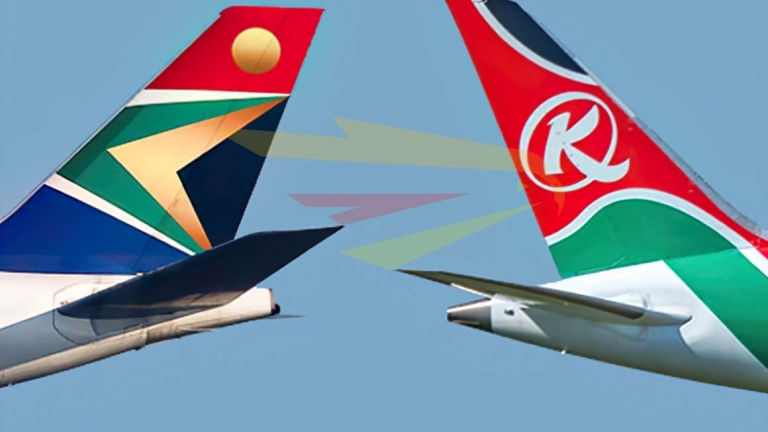
    South African Airways (SAA) has inked a codeshare agreement with Kenya Airways (KQ) on flights to and from their home countries in a bid to increase their reach.
    The deal, which became effective immediately, will see each airline sell, under its own code, flights operated by each other while travellers will combine flight segments and baggage on a single ticket.
    The pact will also give passengers travelling out of South Africa more options to travel to African destinations, including Nairobi, Dar es Salaam, Entebbe, Mombasa and Kisumu.
    KQ passengers, on the other hand, will have more choices for travel into Southern Africa, including Cape Town, Durban, and Harare immediately.
    The growth of the partnership, the two airlines said, will see the addition of Zanzibar, Kilimanjaro, Juba, Douala, Lusaka, Ghana and Nigeria, subject to government approval as the two carriers seek to offer more options for travellers within Africa.
    “We are very pleased to implement the codeshare with SAA, which offers our shared customers more options and flight combinations,’’ Allan Kilavuka, Kenya Airways CEO and group managing director, said on Tuesday.
    “We are looking forward to introducing Kenya Airways customers to our award-winning service, and to working closely with Kenya Airways as our partnership will improve the connections between our respective networks,” says Prof John Lamola, interim CEO of South African Airways.
    KQ is a member of the Sky Team — the second-largest airline network — while the South African carrier belongs to Star Alliance, so far the largest of the three major aviation clubs with a membership of 28 airlines.
    The two carriers signed a strategic partnership framework in South Africa last November, which will see them eventually form a Pan-African carrier amid common longstanding financial woes exacerbated by the Covid-19 pandemic, among other problems.
    It is expected that the partnership will improve the financial viability of the two airlines currently struggling to stay afloat.

  • Tanzania: NMB Eyes Three Key Sectors With 9 Pc Interest

    Tanzania: NMB Eyes Three Key Sectors With 9 Pc Interest

    NMB Bank has urged farmers, fishermen and livestock keepers to tap loan opportunities offered by the lender after slashing interest rates to 9 per cent from May this year.

    This was said by the NMB official responsible for Control and Implementation, Oscar Nyirenda said here over the weekend during the meeting with members of the business club from Lindi and Mtwara.

    “Farmers, fishermen and livestock keepers have a reason to increase borrowing and expand their economic activities after NMB cut down lending cost to 9 per cent from over 10 per cent last year,” he said.

    He added, “The reduction of lending rates to single digit is the implementation of the plea made by President Samia Suluhu Hassan last year seeking commercial lenders to cut down cost of lending to give relief to borrowers,”

    He said also that special arrangement for interest rates will be made for small scale business people borrowing between 500,000/- and 5m/- when they meet the criteria.

    He said before President Samia’s call for commercial lenders to reduce interest rates, NMB had already slashed it to 10 per cent last year and heeding to the Head of the State plea, the lender cut it down again to 9 per cent.

    The NMB Southern Zone Manager Janeth Shango said that NMB is ready to serve and provide business people with loans and financial education that are necessary in expanding their business.

  • Dollar loses steam, euro on front foot as ECB meeting looms

    Dollar loses steam, euro on front foot as ECB meeting looms

    SINGAPORE — The U.S. dollar retreated further on Wednesday as the euro extended its overnight bounce on relief Europe might avoid the worst fears concerning energy shortages, and on the chance the European Central Bank may deliver a more aggressive rate hike.

    Russian gas flows via the Nord Stream 1 pipeline are seen restarting on time on Thursday after the completion of scheduled maintenance, Reuters reported on Tuesday.

    The euro tacked on 0.25% to $1.0245, having risen 0.75% the previous day, its strongest daily gain in a month.

    Aiding sentiment was news that the ECB is considering raising interest rates by a larger-than-expected 50 basis points at their meeting on Thursday.

    “If we do see Russian gas flows resume tomorrow, that will be good news for the euro/dollar and in the near term, euro can get a little boost and get away further from parity,” said Carol Kong, a currency strategist at Commonwealth Bank of Australia.

    “But I am still worried about the euro/dollar, I think downsides still persist … the potential hawkish pivot from the ECB may not be able to give sustained support.”

    The euro has lost about 2.3% since the beginning of July, and broke parity with the dollar for the first time in two decades last week following a red-hot U.S. inflation print and fears about a sharp economic downturn in the eurozone.

    Other major currencies similarly rallied on the back of the weakening greenback, and as central banks around the world become more hawkish in their efforts to tame soaring inflation.

    The U.S. dollar index measure against a basket of key currencies was down 0.14% to 106.52, well off its two-decade peak of 109.29 last week.

    The U.S. currency’s retreat has also coincided with reduced expectations of a supersized 100-basis-point rate hike at next week’s Federal Reserve policy review.

    The Aussie was up 0.4% at $0.6925, after rising 1.3% overnight, also the largest in a month.

    Ahead of the Fed’s meeting next week, markets are pricing in a 23.2% chance of a 100 bp rate hike., with expectations of the jumbo rate increase easing after policymakers were quick to pour cold water on it.

    Minutes of the Reserve Bank of Australia’s (RBA) July policy meeting out the day earlier showed that the central bank sees a need for more policy tightening to curb inflation.

    Earlier on Wednesday, RBA Governor Philip Lowe also suggested that rates could at least double from current low levels.

    Sterling likewise advanced 0.28% to $1.2031.

    Bank of England Governor Andrew Bailey said on Tuesday that a 50-basis-point rate hike will be “among the choices on the table” at the BoE’s next meeting.

    Conversely, the Japanese yen remained an outlier on Wednesday morning, and last traded 138.155 per dollar, as the Bank of Japan seems determined to stand by its dovish stance.

    “Sticking to its dovish guns will entail sharpening policy trade-offs for the BOJ. The most pressing of which, is the sharp drop in the JPY; which has fallen a gut-wrenching 20-21% since the September FOMC,” said Vishnu Varathan, head of economics and strategy at Mizuho Bank in Singapore.

    Over in the cryptoverse, Bitcoin was steady at $23,300, just off a five-week high hit the day before.

    (Reporting by Rae Wee in Singapore and Alun John in Hong Kong Editing by Shri Navaratnam)

  • NSE sheds Sh95bn in days on profit-taking

    NSE sheds Sh95bn in days on profit-taking

    Investors’ wealth at the Nairobi Securities Exchange (NSE) plunged Sh95 billion as local traders raced to profit from stocks bought cheaply a month ago.

    The NSE’s market capitalisation closed at Sh2.15 trillion on Monday, down from Sh2.25 trillion last Thursday as a result of the profit taking, analysts said.

    The drop followed a rally at the Nairobi bourse as local investors scrambled to buy shares that were trading at multiple-year lows following a sell-off by foreigners.

    Before Thursday, the NSE had gained Sh433 billion from June 27 when the market value dipped to a five-year low of Sh1,820 trillion.

    “It is probably just some profit taking. Safaricom moved from Sh23 to Sh32 so investors who bought low are crystallising their gains. Also, those who wanted to sell but thought prices were too low now have the opportunity,” said Muathi Kilonzo, head of equities at EFG Hermes Kenya.

    The profit taking has been more pronounced in the Safaricom stock after the share rose from Sh23.15 on June 27 to Sh32 last Thursday, translating to gains of Sh354 billion.

    The gain prompted investors, especially locals, to sell the telco’s shares over the past two days. The sell-off saw Safaricom’s shares drop to Sh30 at the close of trading on Monday or Sh82 paper loss.

    This means Safaricom accounted for 86 percent of the bourse paper loss despite the firm closing its books on July 29 for dividend payment of Sh0.75 a share.

    The telco accounts for 56 percent of the entire NSE market wealth, a dominance that is making it difficult for investors to gauge the performance of the bourse.

    East Africa Breweries Limited (EABL) shed Sh2.17 billion in the two days, followed by KCB Group (Sh1.76 billion) and Equity (Sh1.5 billion).

    Despite the two-day loss, investor wealth at the NSE has risen Sh338 billion in the past three weeks, following increased trading on Safaricom, Equity Group, EABL and KCB.

    The four stocks, which account for three-quarters of the market’s total valuation, had fallen to 52-week lows towards the end of June on the back of sustained foreign investor selling.

    Renewed local investor demand due to favourable entry prices has seen analysts forecast the market making gains despite the profit taking on Safaricom.

    This is because there is still ample supply from foreign investors who have continued to move their capital to markets such as the US after an upward review of rates to fight rising inflation, which has raised returns on western bonds.

    This inflationary pressure across the globe is a result of high energy and food prices following Russia’s invasion of Ukraine in February, which cut off wheat and fuel exports from the Black Sea region.

    Supply chain constraints have also raised the cost of goods, largely due to higher shipping costs, feeding the inflationary pressure.

    Similar price pressures have hit the Kenyan economy, where prices of essential food items such as flour and cooking oil have risen sharply, pushing inflation to a 58-month high of 7.9 percent.

    Due to the flight of capital from emerging markets, local stock prices fell sharply in June.

    The impact

    Multiple stocks fell to 52-week lows, ushering in a buyers’ market where there were attractive entry prices offering good dividend yields and potential for capital gains once the market corrected itself.

    “Foreign investors are still recording net outflows, which has provided a steady supply for local investors looking to get into the market, hence the rise,” said Melodie Ndanu, an analyst at Genghis Capital.

    The impact of the four counters on the fortunes of the NSE has once again exposed the exposure risk facing the market, making it difficult for investors to gauge the true health of the stock market.

    The performance of these four stocks often shows a market that is either in good health or in trouble, disregarding underlying fundamentals for a majority of counters.

    For instance, a sharp gain in the Safaricom stock results in a significant jump in investor wealth and the NSE Al Share Index, even when other counters record limited movement, due to the telco’s massive footprint on the bourse.

    These stocks also dominate the foreign trading desk and daily traded turnovers, giving foreign investors outsize influence on the bourse despite holding just 20 percent of the issued shares.

    Local investor apathy has also helped cement this dominance by foreign investors.

    Most local retail investors entered the market during the IPO boom of the mid-2000s, but rarely traded actively afterwards after cashing in on their stock or were locked in by low prices for the new market entrants whose fortunes dipped after listing.

    Earlier this year, the Central Depository and Settlement Corporation (CDSC) revealed that nearly 97 percent of equity accounts used for trading at the NSE had been dormant in the past two years, meaning that only 61,000 of the 2.03 million share accounts at the depository have participated in trading over the period.

  • Africa’s largest renewable energy IPP to be sold to Egyptian company

    Africa’s largest renewable energy IPP to be sold to Egyptian company

    Mainstream Renewable Power together with investment company Actis have announced the sale of Africa’s largest pure-play renewable energy independent power producer (IPP) Lekela Power, to Egyptian company Infinity Group and Africa Finance Corporation (AFC).

    News of the sale was revealed in a joint statement by Mainstream and Actis on Monday, months after reports of the potential transfer – estimated to be worth approximately $1 billion – surfaced a few weeks ago.Although the deal awaits regulatory approval, should authorities give the greenlight, AFC will acquire Lekela’s one gigawatt (GW) fully-operational wind assets, as well as five operational wind farms located in South Africa, one operational wind farm in Egypt and Senegal each, together with other development opportunities Lekela has in Ghana, Senegal and Egypt.

    “We’re proud to leave Lekela Power strongly positioned for its next phase of growth as an acknowledged sustainability leader, supplying much-needed clean energy to communities across Africa, building on our net zero commitment,” Actis’ partner and head of energy infrastructure Lucy Heintz says.

    SA’s power crisis

    Forming part of Lekela’s South Africa portfolio is the Khobab Wind Farm located in Loeriesfontein – a small town in the Northern Cape. According to Lekela’s website, the wind farm provides about 564 000 MWh of clean energy to the country’s national grid every year, serving approximately 170 000 South African households.

    In the face of South Africa’s energy supply crisis, IPPs like Lekela will play an important role in helping alleviate pressure from struggling state-owned power utility Eskom, which has been vocal about its inability to meet electricity demand in the country, as well as the role that renewables will play in closing that supply gap.In the meantime, South Africans who have been bearing the brunt of the worst bout of power cuts in the last few weeks wait with bated breath for President Cyril Ramaphosa to reveal his grand plan that will hopefully see a nearing end to the country’s energy supply crisis. “Our vision is of a world electrified by renewable energy. Together with our strategic shareholders Aker Horizons and Mitsui, we are well positioned to lead and truly accelerate the transition to renewables in South Africa, across the African continent and in markets globally.”

  • Exim Bank completes acquisition of FNB Tanzania

    Exim Bank completes acquisition of FNB Tanzania

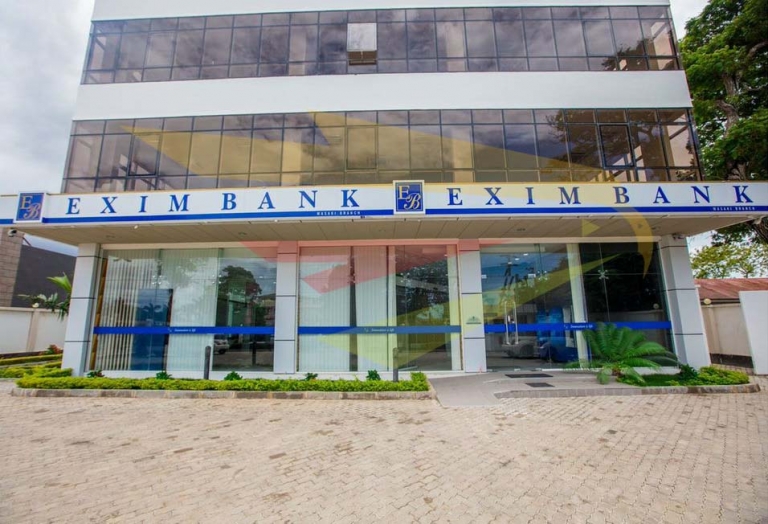
    Dar es Salaam. Exim Bank Tanzania has completed the acquisition of assets and liabilities of First National Bank (FNB) Tanzania Limited as it ups its expansion plan domestically and regionally.

    The move comes almost nine months after Exim Bank Tanzania signed the offer to acquire certain assets and liabilities of FNB Tanzania on October 26, 2021.

    The signing paved the way for regulators to start scrutinising the deal, compelling the Fair Competition Commission (FCC) to start looking for stakeholders’ inputs through its January 10, 22 public announcement.

    Exim Bank’s Chief Executive Officer (CEO), Mr Mr Jaffari Matundu, said at the weekend that regulators, including the Bank of Tanzania (BoT), have okayed the deal and that clients with FNB are now banking with Exim Bank.

    This is the second acquisition by Exim Bank Tanzania after that of UBL Tanzania which was sealed three years ago.

    “We are excited to welcome former FNB Bank customers to the Exim family,” he said at the weekend.

    Exim Bank Tanzania was established almost 25 years ago. It has since expanded to the Comoros, Djibouti, Uganda and Ethiopia, boasting a total of Sh2.4 trillion in asset size throughout the region.

    According to Mr Matundu, Exim Bank generated a pre-tax profits of Sh18 billion during the first half of the current calendar year, up from only Sh6 billion that was registered during a similar period last year.

    Total assets reached Sh1.5 trillion from Sh1.3 trillion over the past year while consumers’ deposits rose from Sh780 billion at the end of June last year to Sh943 billion in June this year.

    Mr Matundu attributes the growth to a conducive environment that the banking sector was currently working in which was in line with President Samia Suluhu Hassan’s pro-business policies.

  • Uganda’s Central Bank raises policy rate to 8.5pc as inflation bites

    Uganda’s Central Bank raises policy rate to 8.5pc as inflation bites

    Uganda’s Central Bank has raised its benchmark policy rate by one percent to 8.5 percent in a radical move. This was occasioned by panic amidst surging inflation levels and increased pressure exerted by the US dollar against the local currency as a result of spikes in interest rates registered by developed economies.

    This development follows a sudden monetary policy committee meeting held on Tuesday on the back of latest inflation data, signs of vulnerability exhibited by the local currency against the US dollar, and raging uncertainty over global supply chain shocks caused by the ongoing Russia-Ukraine military conflict.

    The latest one percent increase in the Central Bank Rate (CBR) comes on the heels of a previous one percent increment announced last month. Besides growing worries pegged to rising commodity prices, increased interest rates tied to treasury bills and bonds plus trading patterns recorded by the local shilling against the US dollar could dominate the Central Bank’s policy radar in the aftermath of the policy announcement.

    “Inflation continues to rise, largely influenced by external cost pressures stemming from higher global food and energy prices, persisting global production and distribution challenges, as well as rising domestic food crop prices due to dry weather across the country…Annual food crop inflation has sharply risen from 0.7 percent in February 2022 to 14.5 percent in June 2022…The MPC considers that the monetary policy stance will have to be tightened even further so as to ensure that inflation eases back to target in the medium-term…” reads Bank of Uganda (BOU)’s latest monetary policy statement.

    The Uganda shilling rose by around Ush30 ($0.008) against the US dollar a few hours after the policy rate announcement and closed at Ush3,718 against the green buck on Tuesday.

    “The Central Bank may be constrained in tackling supply side driven price shocks but its mandate on matters of ensuring price stability remains. The one percent increase in the CBR seems inevitable to us in a situation of surging inflation. The government raised Ush1.4 trillion ($373.1 million) from the local debt market in June through scheduled bond auctions and also mobilised another Ush748 billion ($199.3 million) through an unscheduled Treasury Bond auction done last month. Those moves have ignited increases in interest rates earned on Treasury bonds of late and this has helped retain some offshore investor interest in this market,” said Benoni Okwenje, the General Manager for Financial Markets at Centenary Bank Limited.

  • Banks make 4.5pc margin on cheaper mortgages scheme

    Banks make 4.5pc margin on cheaper mortgages scheme

    Commercial banks and saccos added an average margin of 4.5 percent on funds obtained under a State-backed affordable housing plan, according to the Kenya Mortgage Refinance Company (KMRC).

    Seven financial institutions got Sh1.34 billion from KMRC after it started disbursing funds for onward lending to home buyers last year, the firm says in its annual report for 2021.

    The mortgage refinancing firm, incorporated to derisk access to home loans for workers earning up to Sh150,000 a month, offers funds to banks and saccos for onward lending at an annual interest of five percent.

    The recipient lenders are, in turn, expected to lend out the cash to home buyers for single-digit interest rates.

    “The average lending rate is 9.5 percent per annum fixed for the tenor of the (home) loans,” KMRC told the Business Daily in regard to funds disbursed last year.

    The rate is lower than the average commercial bank lending rate of 12.2 percent as of May.

    Prospective home buyers who qualify for home loans under the KMRC framework access up to Sh4 million for property in the Nairobi metropolitan area and Sh3 million elsewhere, with a repayment period of up to 20 years. The KMRC funding covered 574 home loans last year, putting the average mortgage size at Sh2.34 million.

    The overall industry’s average mortgage size last year increased to Sh9.2 million from Sh8.5 million previously, the Central Bank of Kenya data shows, locking out low- to mid-income workers from a thin market of 26,723 home loan accounts worth Sh232.7 billion.

    Co-op Bank, which accounted for 5.6 percent of the residential mortgages market last year, tapped the highest amount from KMRC at Sh550 million, followed by HFC (Sh515 million).

    Others were Unaitas Sacco (Sh116m), Stima Sacco (Sh69m), Credit Bank (Sh52m), Tower Sacco (Sh30m), and Ukulima Sacco (Sh12m).

    “The focus for KMRC is to help drive down the rates so that we have low rates and longer tenors. So we are trying to help people who are at lower income levels to get financing for housing,” KMRC chief executive Johnstone Oltetia said earlier.