Author: broker

  • NHC to list bond on DSE as profit surges

    NHC to list bond on DSE as profit surges

    Dar es Salaam: THE National Housing Corporation (NHC) will for the first time in history list its bond on the stock market, with the company disclosing that it has recorded a significant rise in revenue and profit.

    The company’s revenue soared to 257.5bn/- in the financial year 2021/22 up from 144.4bn/- in 2020/21, equivalent to 78.3 per cent rise. NHC saw its profit rising to 60.7bn/- up from 31.7bn/-, equivalent to a 91.5 per cent increase during the period.

    “Within a period of one year we are going to issue the bond on the Dar es Salaam Stock Exchange, it will be known as Nyumbani Bond,” NHC Director General Hamad Abdallah revealed on Thursday in Dar es Salaam at a meeting with editors from different media houses.

    The meeting was a continuation of meetings between public organisations and the editors organised by the Office of the Treasury Registrar with the aim of highlighting their activities and achievements.

    Mr Abdallah stated that the NHC housing bond is now in the preparatory stages within the institution, whereby the first proposal was already presented to the NHC Board of Directors.

    Elaborating on the factors for the rising revenue and profit, he said, the company managed to collect more revenue from its rented houses and through the sale of houses and commercial buildings.

    Through the sales of residential and commercial buildings the company garnered a total of 121.95bn/- in the year 2021/22 up from only 29.3bn/- in 2020/21 which is a quadruple.

    Again, the income from the rented buildings went up from 89.9bn/- in 2020/21 to 90.76bn/- in 2021/22.

    In the meantime, the company collected 45.98bn/- in 2021/22 from engineering consultancy services, an amount which is above 25.6bn/- in the previous year.

    “In three years consecutively, the corporation has been growing at a rate of 12 per cent.

    Speaking over the ongoing projects, he explained that they are implementing an ambitious 466bn/- project dubbed ‘Samia Housing Scheme’ through which 5000 units will be erected in Dar es Salaam, Dodoma and other regions.

    50 per cent of the houses will be built in Dar es Salaam, 20 per cent in Dodoma and the remaining 30 per cent in other regions.

    In Dar es Salaam the scheme started in September 2022 at Kawe area, where 560 units are under construction.

    “About 85 per cent of these houses have already been sold while the construction is currently ongoing,” NHC boss stated.

    “We have named this scheme after Samia because these projects were stalled for some years and it is President Samia Suluhu Hassan who revived them.”

    He pointed out that in Dodoma, the Samia Housing Scheme will kick off from next month where in the first phase 100 units will be constructed.

    Mr Abdallah mentioned other grand projects which had stalled but have now resumed, including the Morocco Square project worth 137bn/-, which has been completed by 97 per cent.

    “We have started getting tenants and buyers for houses at the Morocco Square grand project,” he stated, mentioning another grand project  called Kawe 711 and the Golden Premium Residence.

    The Morocco Square, which consists of residential, shopping malls, office spaces and hotel, once it becomes operational, the company aims to collect 850m/- monthly, which roughly it will be collecting 9bn/- a year.

    “We look forward to starting to get a return on investment after 12 years.”

  • Top 10 best performing stock markets in Africa

    Top 10 best performing stock markets in Africa

    Tanzania has been ranked number six as the top-performing African stock market that have displayed outstanding returns, captivating attention and admiration from the investment community.

    This is according to the African Financials Research, based on data available up to June 2023.

    With Up to 1.7 per cent, Tanzania along with BRVM Cote d’Ivoire have admirably held their ground, both showcasing a modest 1.7 per cent increase in US dollar returns.

    These markets have exuded resilience amidst regional economic challenges, earning the utmost respect of the investment community.

    According to the report, which has been published by the Business Insider Africa, ranks Malawi highest in the continent (up 67.6 per cent) with an awe-inspiring surge of 67.6 percent in US dollars, Malawi’s stock market has emerged as a force to be reckoned with, displaying unparalleled resilience and potential.

    Despite its relatively modest size, Malawi’s economic prowess has astounded investors, drawing shrewd minds in search of promising prospects.

    Namibia (Up 18.1%) Namibia’s stock market has proven to be a stalwart performer, boasting an impressive 18.1% increase in US dollar returns. Revered for its stable economic conditions, Namibia has quickly become a favoured destination for investors seeking reliable growth avenues.

    Zambia (Up 15.5%) Amidst the tumultuous economic landscape, Zambia’s stock market has demonstrated unwavering mettle, soaring with a robust 15.5% gain in US dollar terms. Endowed with abundant copper resources, Zambia has captivated investors who envision long-term prosperity in the country.

    Seychelles and Uganda (Up 3.7%) Both Seychelles and Uganda have stood their ground, recording a commendable 3.7% increase in US dollar returns. These nations have exhibited remarkable resilience, inspiring trust and confidence among investors amidst uncertain times.

    Ghana (up 3.0 per cent) Nimbly navigating through the storm, Ghana’s stock market charts a steady course, delivering a 3.0 per cent gain in US dollar returns. Bolstered by a diversified economy and investor-friendly policies, Ghana continues to beckon discerning investors with its enticing potential.


  • Reasons behind rise in UTT-AMIS asset value

    Reasons behind rise in UTT-AMIS asset value

    Dar es Salaam. In a remarkable display of financial prowess, the Unit Trust Tanzania Asset Management and Investor Services (UTT-AMIS) has witnessed a staggering surge in Assets Under Management (AUM) over the past four years of over 429 percent.

    The level of assets managed by the trust has improved from Sh290 billion recorded in 2019 to a staggering Sh1.535 trillion by the end of June 30, 2023.

    The improvement in assets signals that Tanzanians are now aware of the various profitable investment avenues at their disposal. It also suggests that the assets were being managed profitably, thus yielding steady returns to investors, who include those in retirement, students, and those conducting various small-scale income-generating activities.

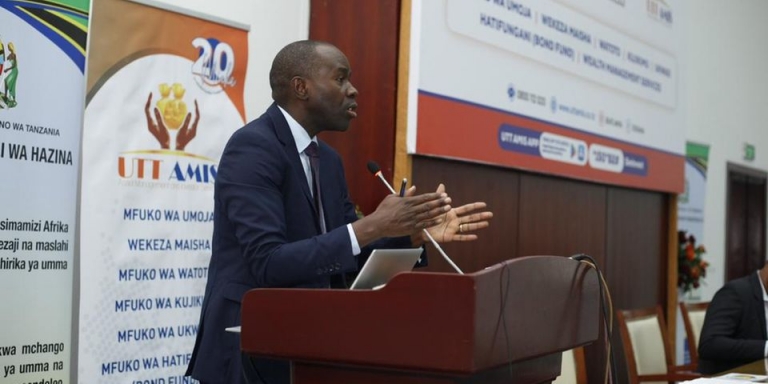
    UTT-AMIS’ managing director, Mr Simon Migangala, said yesterday that the meteoric rise in the assets under management can be attributed to several strategic initiatives that have effectively propelled the company’s growth trajectory.

    Apart from the government’s pro-business approach, which has injected a new zeal of reliability into Tanzania’s dealings with investors, the rise was also a result of UTT-AMIS’ seamless integration of digital technology into its investment services.

    “By integrating mobile phones and banking channels, UTT AMIS has managed to reach a broader audience, making the investment process more accessible, efficient, and user-friendly,” he said during a meeting with journalists yesterday. The meeting was part of an initiative by the Treasury Registrar, Mr Nehamia Mchechu, to ensure that the institutions under his docket do come out to tell Tanzanians how their various institutions have been performing during the past few years.

    And according to Mr Migangala, the current asset value was also above the initial projections, where the institution expected to collect Sh485 billion in five years (by ‘2024). “One pivotal move that has significantly influenced this outstanding growth is the reduction of the minimum initial investment amount to Sh100,000. This strategic decision has opened doors for a more extensive demographic of investors, encouraging individuals from all walks of life to participate in collective investment schemes,” he said.

    He exuded confidence that if the current pro-business policies, spearheaded by President Samia Suluhu Hassan, are maintained, UTT-AMIS will achieve even more going forward.

    “In short, investors are very positive with the government’s policies and we hope to do even better going forward,” he said, adding that most of the assets have been realised during the past two years.

    For instance, as of June 2021, the assets stood at Sh619.6 billion, but they rose to Sh996.8 billion as of June 2022 before rising further to Sh1.536 trillion as of June 2023.

    For his part, the head of marketing and public relations, Mr Daudi Mbaga, said UTT AMIS has actively contributed to the rise of awareness concerning financial market investments.

    He said that through financial education and investor empowerment, the company has conducted outreach campaigns to enhance financial literacy among Tanzanians, especially young adults in schools.

    “We provide a safe haven for people who want to invest with purpose. We inject the funds into safe investment options, which in turn ensure lucrative earnings for the investors,” he said.

    One of the key goals for the UTT AMIS, he said, is to assist investors in accessing investment opportunities in financial markets, and this is being done to foster financial inclusion and economic development.

  • UTT AMIS makes historic growth in two years

    UTT AMIS makes historic growth in two years

    THE UTT AMIS fund size has recorded historic growth of 184.94 per cent to 1.53tri/- in two years of President Samia Suluhu Hassan reign-a move which has been attributed to improved investors’ confidence in the financial markets.

    The government established the collective schemes to help investors particularly micro, small scale access financial markets to ultimately boost financial inclusion and economic empowerment.

    The 27 months of President Dr Samia in power witnessed the Fund growing to 1.53tri/- in June this year from 539.0bn/- in March 2021, which is an increase of 996.3bn/-.

    The UTT AMIS Managing Director Simon Migangala said in Dar es Salaam yesterday that the outstanding performance signifies hefty returns to investors’ mostly micro and small scale as well as increased dividend to the government.

    “We have witnessed huge improvement in investment environment that created investors’ confidence in the financial markets thus attracting more investors,” he said.

    He added, “The way President Samia is creating investors’ confidence in the financial markets is contributing greatly in the growth of the collective investment schemes.”

    Mr Migangala said the outstanding performance in just two years of President Samia makes UTT AMIS the fastest growing collective investment scheme in East Africa region.

    Apart from the improvement of investors’ climate, he said the Fund has invested heavily on technology that helped to reach more people.

    “For example, with the mobile phone, an individual can open account and start investing in the collective investment schemes,” he said.

    With technology, he added, the Fund has managed to bridge the geographical barrier reaching out urban and rural people accessing and benefitting from it.

    He said also that the Fund is partnering with banks like NMB, CRDB, NBC through which investors can access and take advantage of various schemes and services.

    The deployment of technology has helped to increase the number of investors to over 300,000 investing in a wide range of the Fund’s schemes and services.

    Currently, UTT AMIS has seven schemes and services namely Umoja Fund, Wekeza Maisha Fund, Watoto Fund, Jikimu Fund, Liquid Fund, Bond Fund and Wealth Management Service.

    Apart from providing huge investment avenue for small scale investors to participate and benefit from money markets, he said the Fund is also paying dividend to the government.

    The UTT AMIS Director of Marketing Mr Daudi Mbaga said the Fund is currently covering six regions and the expansion is being implemented gradually.

    He however, said the use of technology and partnership with banks has helped to cover almost the whole country to reach out all potential investors.

    He said further that the Fund has been using many other platforms like exhibitions including those for farmers, entrepreneurs, innovators to provide education on the usefulness of the collective investment schemes.

    The various initiatives have contributed significantly to the growth of the collective investment schemes.

    For example, in 48 months from July 2019 to May this year assets increased by 1.24tri/- equivalent to 428.31 per cent.

    In five years from 2009 to 2014, assets increased by 113bn/- which is an average annual growth of 22.6bn/-.

    The UTT was established under the Trustee Incorporation Act, Cap 318 and was vested with the several key activities including the development of collective investment schemes, acquiring and keeping in trust the shares of privatised enterprises and encouraging savings culture through wide participation in the ownership of distributed shares/units.

    The UTT was very successful in launching unit trust schemes since five collective investment schemes were launched attracting over 90,000 investors from all over the country.

    Over time UTT grew in size with total funds under management of over 120bn/- as at 30 June 2013 and further diversified into other activities in projects management and microfinance businesses.

    Based on advice of stakeholders and the Treasury Registrar and approval of the Minister for Finance, the Unit Trust of Tanzania (UTT) was restructured into three organisations.

    The objective of the restructuring was to enable each of the key businesses to focus on their activities and services so as to contribute more to increasing of government revenue and promote development of the country.


  • Twiga cement registers 10pc pre-tax profit increase

    Twiga cement registers 10pc pre-tax profit increase

    THE Tanzania Portland Cement Plc (Twiga) has posted a pre-tax increase of 10.2 per cent in this year’s first half, thanks to production cost control measures.

    The oldest cement manufacturer in the country’s financial statement shows that the pre-tax profit increased to 72.02bn/- in the first six months of the year from 65.3bn/- raked in a similar period last year.

    Twiga Chairman, Mr Hakaan Gurdal said in a published statement yesterday that despite the cement demand growing slowly this year, the company will continue delivering strong operation results, aiming higher in the future.

    “Despite the cement demand growing slowly this year, we are optimistic about the second half of the year, Twiga will continue to work on improving efficiency and operating performance,” the chairman said.

    Additionally, the Dar es Salaam-based cement firm posted a net profit increase of 6.3 per cent to 50bn/- compared to the 47.05bn/- of the first six months last year.

    The listed firm on Dar es Salaam Stock Exchange (DSE) also said the profitability was attributed, not only to cost-cutting measures but also increase in revenue. Twiga was trading 4,120/- by yesterday-noon.

    The statement showed that the revenue went up by 8.0 per cent to 246.28bn/- from 227.51bn/-, however over half was chewed up by the cost of sales.

    “This increase is mainly due to the process improvement and cost control in our production. The company has experienced a rather stable growth of sales volume and revenue compared to the same period in 2022,” Mr Gurdal said.

    During the period under the review, Twiga over tripled the net gain from foreign currency translation to 3.97bn/- from 1.05bn/-.

    “On top of the operational excellence, the company continued to improve in the area of health and safety, with zero loss of time to injury recorded in 2023,” the chairman said.

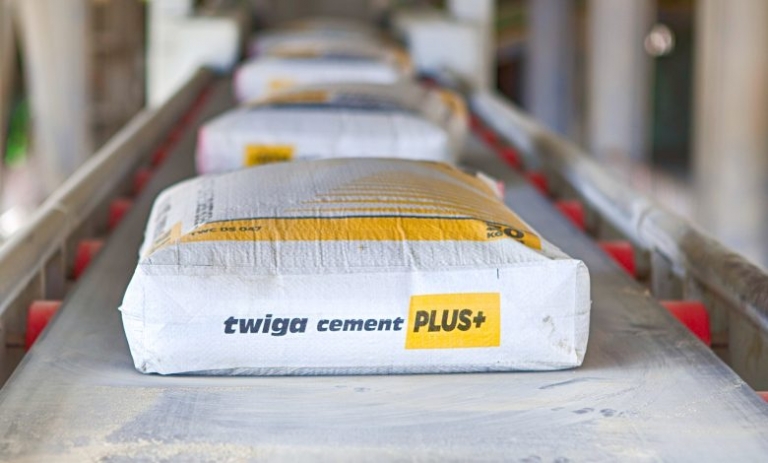
    Twiga is one of the large cement manufacturers in the country, producing three brands of Portland cement -Twiga Ordinary, Twiga Plus+ and Twiga Extra.  The first bag of cement was produced in 1966 and in 2014, the factory expanded and increased its manufacturing capacity to 2,000,000 tonnes per year.

  • Key Insights – FinScope Tanzania 2023

    Key Insights – FinScope Tanzania 2023

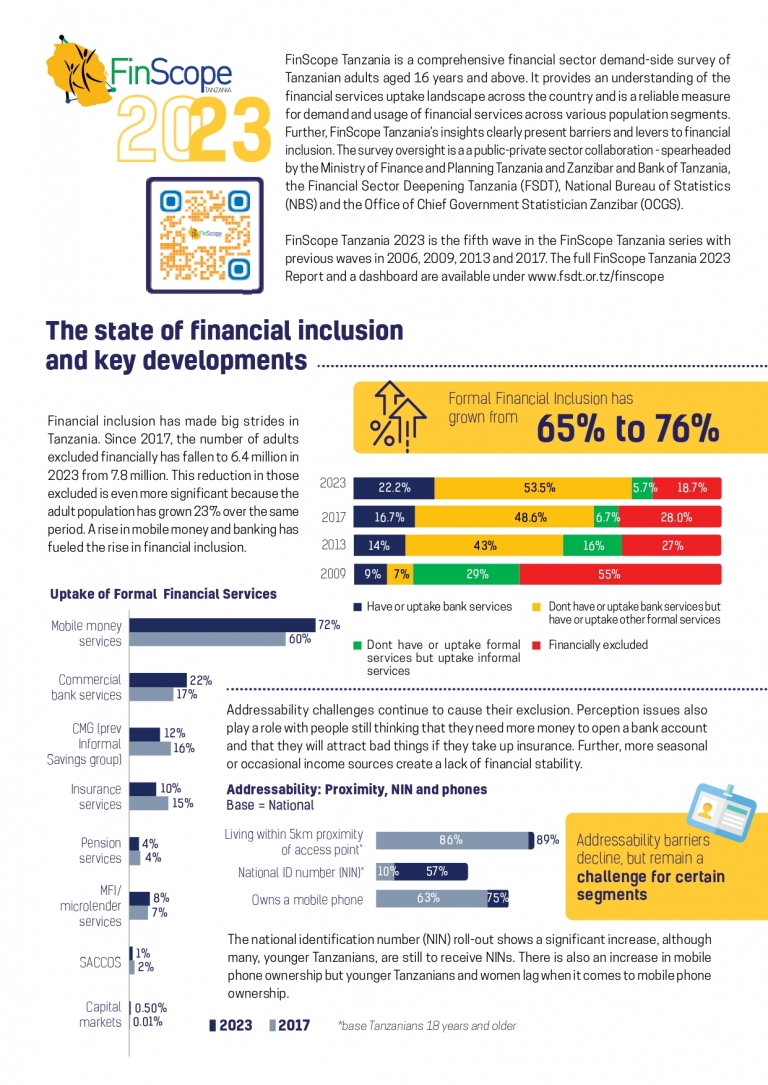
    FinScope Tanzania is a comprehensive financial sector demand-side survey of Tanzanian adults aged 16 years and above. It provides an understanding of the financial services uptake landscape across the country and is a reliable measure for demand and usage of financial services across various population segments. Further, FinScope Tanzania’s insights clearly present barriers and levers to financial inclusion. The survey oversight is a a public-private sector collaboration – spearheaded by the Ministry of Finance and Planning Tanzania and Zanzibar and Bank of Tanzania, the Financial Sector Deepening Tanzania (FSDT), National Bureau of Statistics (NBS) and the Office of Chief Government Statistician Zanzibar (OCGS).

    FinScope Tanzania 2023 is the fifth wave in the FinScope Tanzania series with previous waves in 2006, 2009, 2013 and 2017.

    Click here for one pager Key Insights Report

  • BoT issues licence to new payment service firm

    BoT issues licence to new payment service firm

    By The Citizen Reporter

    Dar es Salaam. The Bank of Tanzania (BoT) has permitted an African digital payments provider, DPO Pay, to operate as a Payment Service Provider in Tanzania, the company said in a statement yesterday.

    The DPO is registered locally under One Payment Tanzania Limited.

    The company has been licensed in line with the National Payment System Act, 2015 which requires all Payment Service Providers (PSPs) to undergo a rigorous license application process to provide payment services in Tanzania.

    DPO Pay managing director, Judy Waruiru said the license highlight the firm’s commitment to compliance and regulatory standards.

    “This milestone demonstrates our dedication to driving financial inclusion and economic growth in Tanzania, empowering businesses of all sizes to thrive in the digital era.

    “We will continue to prioritise the security of transactions, adhering to stringent data protection protocols and industry best practices,” Ms Waruiru said in the statement.

    DPO Pay says it has been operating successfully throughout Africa since 2006 and was recently acquired by Network International, a leading enabler of digital commerce across the Middle East and Africa (MEA) region.

     It has worked closely with regulators across the continent to obtain new licenses as requirements vary in each country to ensure secure and uninterrupted services for its merchants and partners.

    DPO Pay has gained significant recognition and trust among prestigious business in various industries including hotels and resorts in Arusha, Dar es Salaam and Zanzibar, where it has extensive experience in the travel and tourism sector.

    The company, the statement said, has established itself as the preferred payment solution for major merchants in the region, including industries such as Airlines, Hotels, online retailers and logistic companies.

    With a firm focus on expanding its network, DPO Pay continues to seek collaboration with top-tier businesses and brands, and cater to the diverse needs of merchants across various industries.

    The company’s robust security systems ensure that merchants and consumers can transact with confidence, safeguarding their sensitive information and maintaining the highest standards of integrity. With the recently updated DPO Pay Mobile app, merchants are able to collect and receive payments anywhere and anytime.

    DPO Pay provides efficient payment solutions enabling businesses and individuals across the continent to accept both local and international payment options.

    It has developed integrated payments technology to support businesses of all sizes in over 20 countries and accept payments securely and swiftly in multiple currencies and through diverse payment methods including cards, mobile money, bank transfers, USSD, and EFT.